File card · 1-2
Broken Wii wrist strap: how the damage stories began
The Wii reached North American stores on November 19, 2006. Its controller, the Wii Remote, looked like a TV remote and worked by motion. In Wii Sports you swung it like a tennis racket, threw it like a bowling ball and punched with it like a boxing glove. For millions of people, this was the first game they had ever played standing up.
Nintendo knew that people would swing hard. Each remote came with a wrist strap, a thin cord with a sliding lock, and the game reminded players to wear it. What the company had not fully planned for was how hard some players would swing, and how often their hands would get sweaty in long sessions.
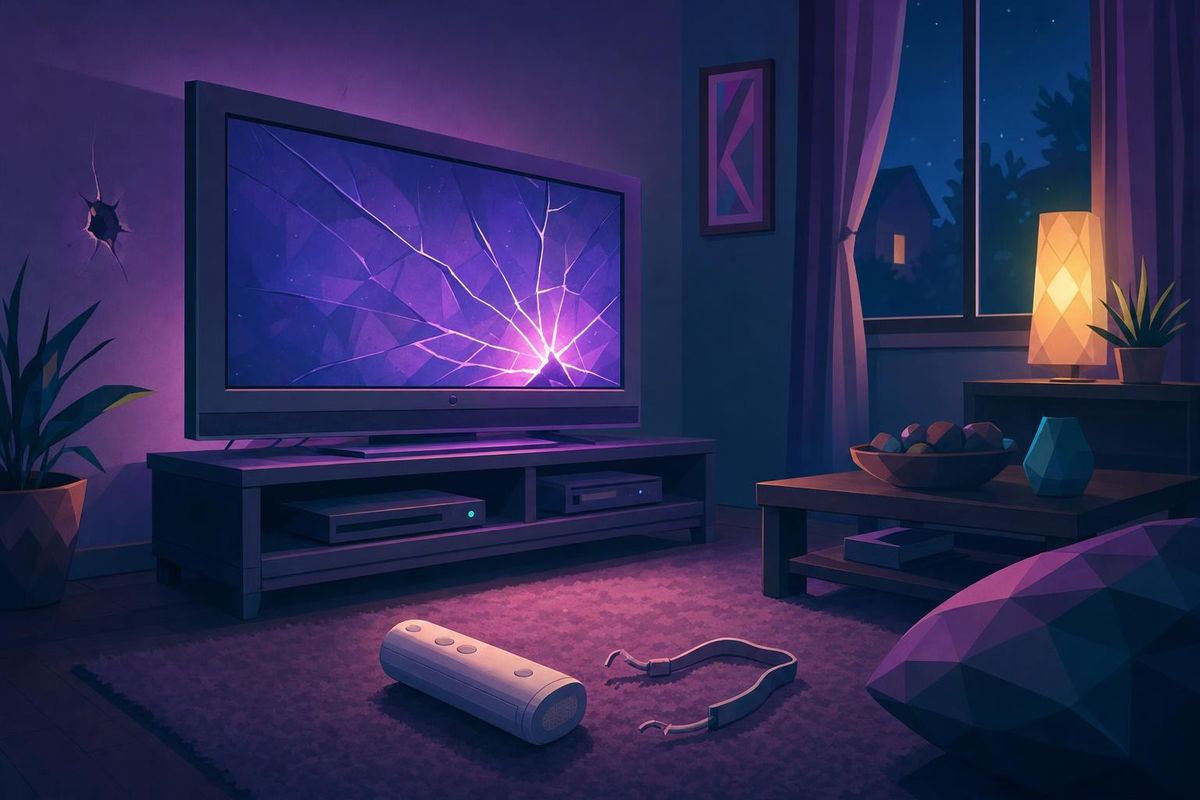
Within days, the first photos appeared. A television with a spider web crack. A remote stuck in a living room wall. A glass cabinet in pieces. Some showed a broken strap still hanging from the player's wrist. Collections of these photos spread on forums and gaming blogs and became one of the first viral stories of the launch season.
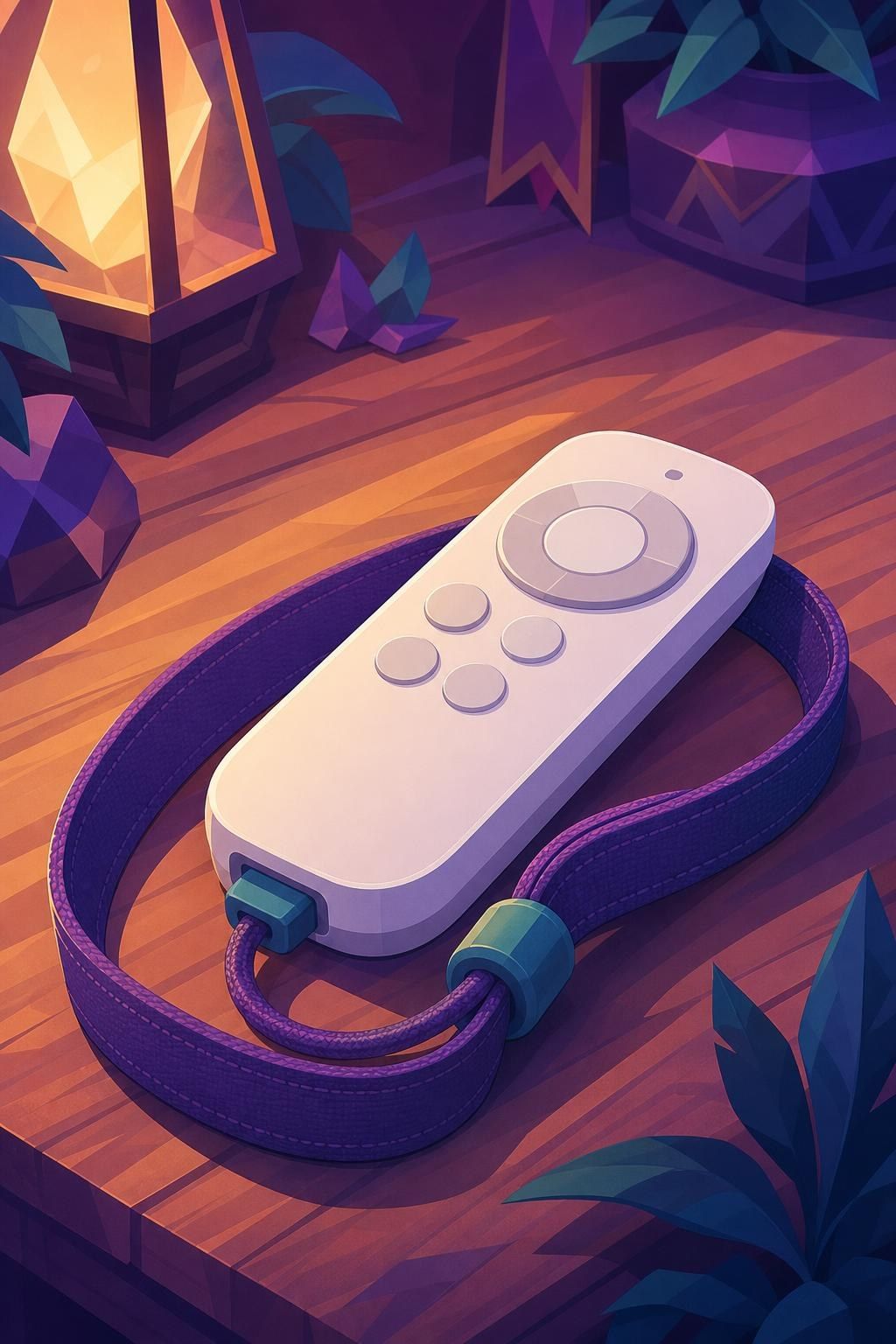
How a Wii wrist strap failed
Most reports followed the same chain of events. Each step is simple, but together they turned a sports game into a hazard.
- 1
A full swing
Bowling and tennis invite a real arm motion. Some players swung with full force. - 2
A loose grip
Sweaty hands, or a player who forgot to hold on, let the remote slide out. - 3
A thin cord
The first strap used a cord about 0.6 mm thick. Under a sharp jerk, it could snap. - 4
Impact
The remote kept moving toward whatever was in front: often the television.
Nintendo also pointed out that many accidents happened when the strap was not worn at all. Both causes were real. A strap that is not worn cannot help, and a strap that breaks cannot either.
The Wii wrist strap recall that wasn't
In mid-December 2006, Nintendo announced a free strap replacement for every Wii owner who wanted one. Reports at the time put the number at about 3.2 million straps, including around 2 million in the United States. The new cord was 1.0 mm thick instead of 0.6 mm, and the lock was redesigned to hold more firmly.
News headlines called it a Wii wrist strap recall. Nintendo avoided that word. In its statements, the company described the change as a voluntary replacement rather than a recall. That is a legal difference more than a practical one: owners who asked got a new strap at no cost either way.
Not long after, a lawsuit claimed the original strap was defective. That did not change the program, which went ahead as planned. For the player at home, the result was the same. A thicker cord arrived in the mail, and new consoles shipped with it in the box.
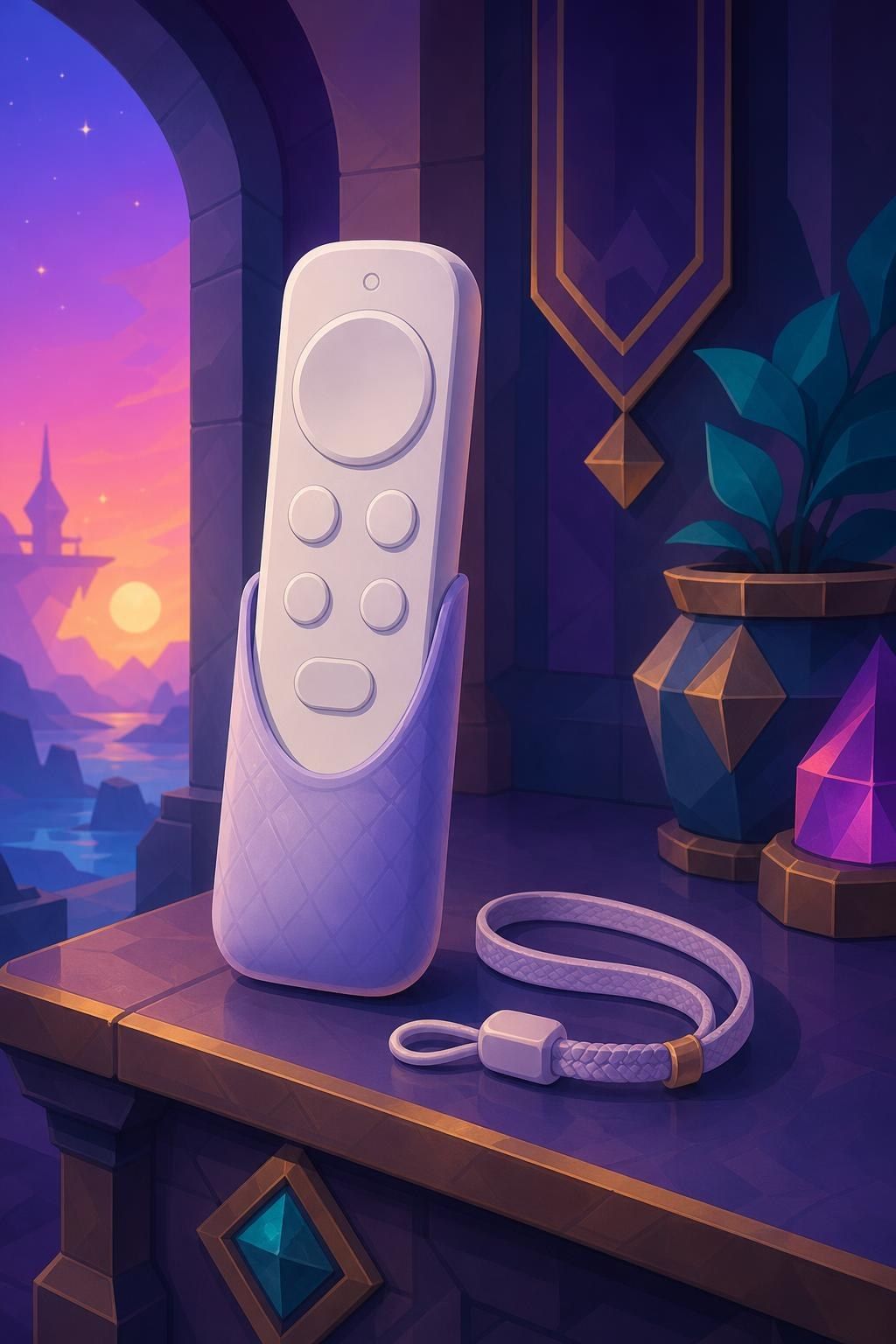
Wii strap replacement: old vs. new
| Detail | Launch strap | Replacement strap |
|---|---|---|
| Cord thickness | 0.6 mm | 1.0 mm |
| Lock | Sliding lock | Redesigned lock that holds tighter |
| Cost to owners | In the box | Free on request |
| Straps replaced | n/a | About 3.2 million worldwide |
| Official term | n/a | Voluntary replacement, not a recall |
In October 2007, Nintendo went one step further and began including the Wii Remote Jacket, a soft silicone sleeve, with new remotes. It gave the controller more grip and softened any impact. Remotes from that point on rarely appear in damage photos.
What the strap story says about the Wii launch
The strap problem was, in a strange way, a sign of success. The damage came from people playing with real enthusiasm, many of whom had never touched a game controller before. Nintendo had set out to bring new people into gaming, and the broken screens proved that it had.
The story also shaped how the press covered motion controls for years. When Sony and Microsoft launched their own motion systems in 2010, reviewers asked about straps and safety first. The Wii had set the questions. For the wider picture of that season, see the Wii and PS3 launch page. For a very different launch-week story, read about the free Wii giveaway lists that spread a day later on the calendar.